For a lot of job seekers, the cover letter is the most dreaded part of an application. You’ve polished your resume, you’re ready to apply, and then the form asks for a cover letter – and you freeze, or worse, you paste the same generic paragraph you use for every job.
A good cover letter isn’t hard, though, once you know the formula. It’s short, it’s specific to the job, and it does one thing your resume can’t: explain why you’re the right person for this particular role. This guide shows you exactly how to write one, with a free sample you can adapt.
What a cover letter is (and why it still matters)
A cover letter is a short, one-page message that accompanies your resume. Where your resume lists your qualifications and experience, the cover letter connects them to the specific job – it tells the employer why you want this role and why you’d be good at it.
Many employers, in India and internationally, still expect one, and even when it’s optional, a tailored cover letter helps you stand out from the many applicants who send a resume alone. The operative word is tailored: a generic letter adds little, but one that names the company and speaks to the role can genuinely tip a decision in your favour.
The standard cover letter format
A clean cover letter follows this structure:
- Your contact details — name, phone, email, city, and LinkedIn if you have one.
- Date
- The employer’s details — hiring manager’s name (if known), company and city
- Greeting — “Dear [Hiring Manager’s Name]”, or “Dear Hiring Manager” if you don’t have a name
- Opening paragraph — the role you’re applying for and a one-line hook on why you’re a strong fit
- Body paragraph(s) — one or two relevant achievements and the skills that match the job
- Closing paragraph — why this company, and a polite call to action
- Sign-off — “Yours sincerely” and your name
How to tailor it to the job
This is what separates a good cover letter from a forgettable one:
Name the company and role. Generic openings (“I am writing to apply for a position at your company”) signal a mass-send. Be specific.
Mirror the job description. Pick out the key skills the posting asks for and show, with a quick example, that you have them.
Lead with achievements, not duties. Instead of “responsible for sales,” write “grew regional sales by 20% in one year.” Numbers stand out.
Don’t just repeat your resume. Use the letter to add context and personality — the why behind your experience — rather than re-listing it.
Keep it short. Half a page to one page. Recruiters skim; a tight letter respects their time and reads as more confident.
Free cover letter sample
[Your Name] [Phone] · [Email] · [City] · [LinkedIn]
[Date]
[Hiring Manager’s Name] [Company Name], [City]
Dear [Hiring Manager’s Name],
I am writing to apply for the position of [Job Title] at [Company Name]. With [X years] of experience in [field] and a strong background in [key skill], I am confident I can make a real contribution to your team.
In my current role at [Employer], I [one concrete achievement — e.g., “improved process efficiency by 25%” or “led a team of eight to deliver projects ahead of schedule”]. This has sharpened my skills in [skills relevant to the job], which align closely with what this role calls for.
What draws me to [Company Name] is [a specific, genuine reason — their product, values or reputation]. I would welcome the chance to bring my [strength] to your team and help [a relevant company goal].
Thank you for considering my application. My resume is attached, and I would be glad to discuss how I can contribute to [Company Name].
Yours sincerely, [Your Name]
Freshers: if you don’t have work experience yet, replace the achievement paragraph with relevant projects, internships, or academic accomplishments, and emphasise your enthusiasm and willingness to learn.
The fastest way to write yours
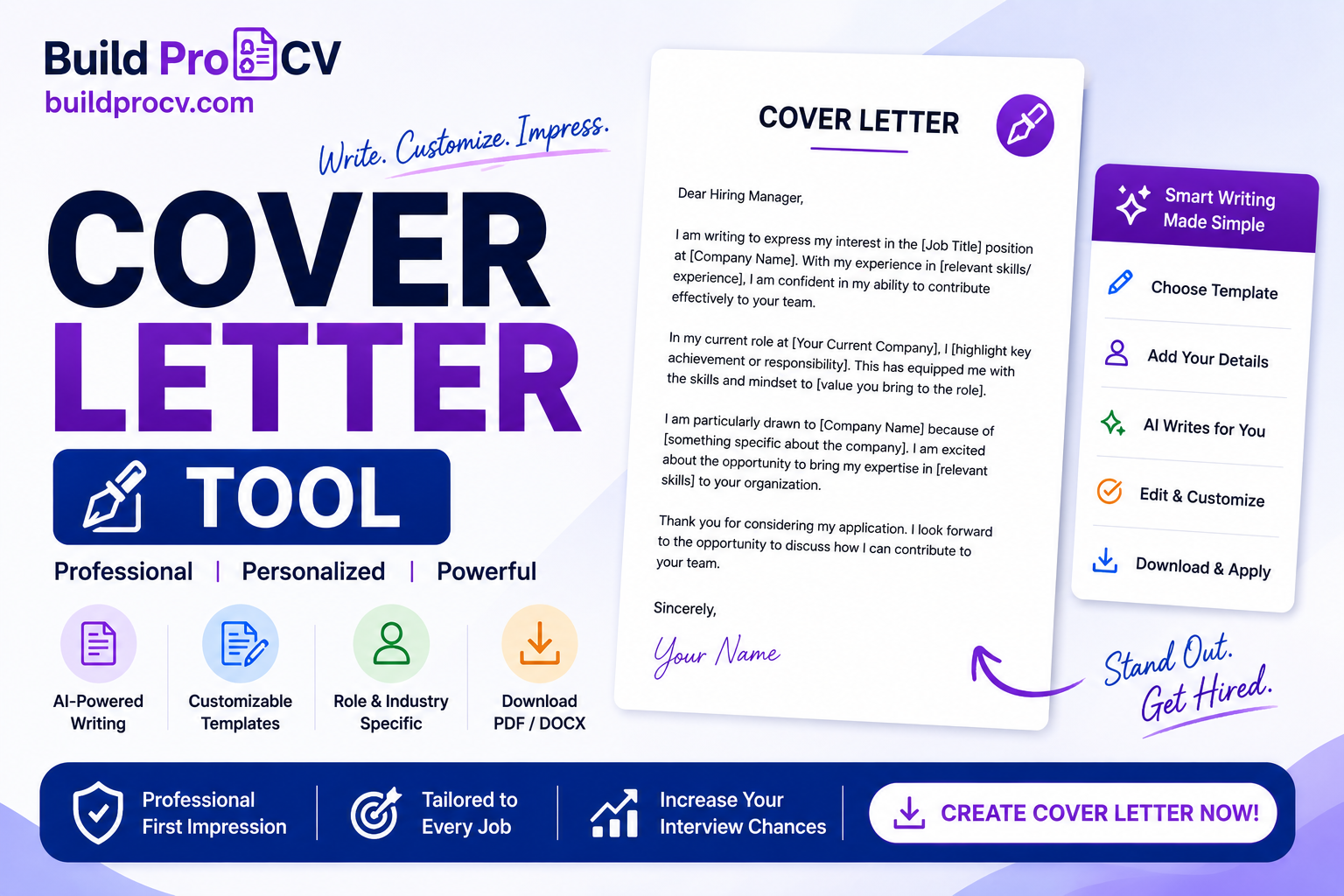
If you’d rather not format all this by hand, the free Cover Letter Maker builds a tailored letter for you in minutes. You enter your details and the job you’re applying for, choose a tone and template, and download a polished PDF — personalised to the role and ready to send. Pair it with your resume from the CV maker and run that resume through the ATS Score Checker before you apply, and you’ll have a complete, well-matched application.
Frequently asked questions
How do I start a cover letter?
Address the hiring manager by name if you can, then open by stating the role you’re applying for and a single line on why you’re a strong fit. Skip generic openings.
How long should a cover letter be?
Half a page to one page – a few short paragraphs. Concise and specific beats long and generic.
Should I write a different cover letter for each job?
Yes, at least tailor the opening and key examples to each role and company. A generic letter is far less effective than one that speaks to the specific job.
Do freshers need a cover letter?
Yes, and it’s especially useful when you have little experience — it lets you highlight projects, internships and enthusiasm that a resume alone can’t convey.
Is there a free tool to create a cover letter?
Yes. A free cover letter maker lets you fill in your details and the job, pick a tone and template, and download a professional letter as a PDF in minutes.